
Sweepstakes Casino Legal States 2026: Complete US Guide
 Available in GB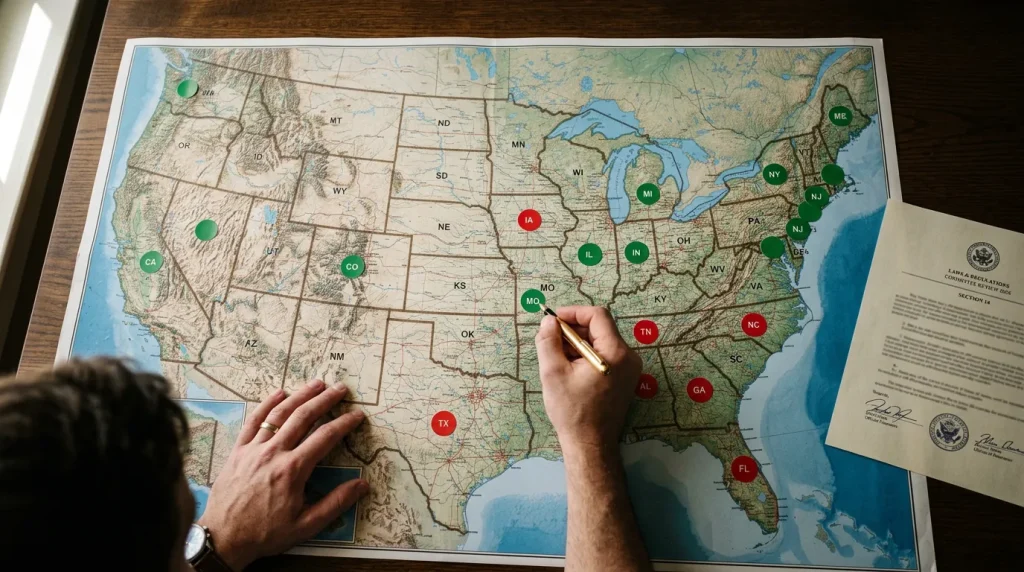
This guide tracks the current legal status of sweepstakes casinos across all fifty states, details the 2026-2026 bans, and explains what players in restricted jurisdictions need to understand about access, enforcement, and pending legislation.
Current Legal Landscape for US Sweepstakes Casinos in 2026
The legal framework surrounding sweepstakes casinos exists in a peculiar space between legitimate promotional sweepstakes and regulated gambling. Most states don’t have statutes specifically addressing the sweepstakes casino model. Instead, platforms operate under general sweepstakes law, which permits promotional games where participants can enter without purchase through an alternative method of entry.
This legal ambiguity allowed sweepstakes casinos to expand rapidly. According to KPMG’s 2026 Sweepstakes Gaming Primer, sweepstakes platforms operated in more than 35 states by early 2026—far exceeding the seven states where real-money online casinos hold licenses. The difference matters: licensed iGaming requires state authorization, background checks, regulatory oversight, and tax contributions. Sweepstakes casinos have argued their promotional model exempts them from those requirements.
Regulators increasingly disagree. Throughout 2026, state gaming commissions and attorneys general began treating sweepstakes casinos as illegal gambling operations rather than legitimate promotional platforms. Cease-and-desist letters, enforcement actions, and legislative bans accumulated across the country. The iGaming Business 2026 year-in-review documented more than 100 cease-and-desist letters issued by state regulators in Arizona, Michigan, Maryland, Louisiana, and elsewhere.
The regulatory crackdown reflects both consumer protection concerns and competitive pressure from licensed gambling operators. State gaming commissions worry about unregulated platforms operating without responsible gambling safeguards, age verification protocols, or consumer complaint mechanisms. Licensed casinos and online gambling companies argue that sweepstakes operators compete unfairly by avoiding the taxes and compliance costs that regulated businesses must bear.
As of March 2026, states fall into three broad categories. A handful have explicitly banned sweepstakes casinos through legislation or regulatory action. A larger group permits operation but has issued warnings, restrictions, or enforcement actions against specific operators. And the majority still lack clear legal frameworks—allowing platforms to operate in a gray zone that could close at any time.
Players navigating this landscape face real challenges. A platform available today might exit a state tomorrow following legal pressure. Account balances could become inaccessible if operators pull out of jurisdictions. And while players themselves rarely face legal consequences, the instability creates practical problems that affect gaming continuity.
States That Banned Sweepstakes Casinos in 2026-2026
The regulatory tide turned sharply against sweepstakes casinos during 2026, with several states moving from tacit acceptance to explicit prohibition. These bans didn’t emerge from nowhere—they reflected years of lobbying by licensed gaming interests, consumer protection concerns from regulators, and legislative efforts that finally gained enough momentum to pass.
California AB 831
California’s sweepstakes casino ban carries outsize significance because of the state’s market size. According to industry estimates discussed at the G2E Las Vegas conference in October 2026, California accounted for approximately 20 percent of total sweepstakes casino revenue—making it the single most valuable state for operators. AB 831 effectively removes that market entirely.
The legislation passed both chambers of the California legislature unanimously, reflecting bipartisan consensus that sweepstakes casinos should not operate in the state. Governor Newsom signed AB 831 in late 2026, with enforcement provisions taking effect in early 2026. The California Senate Public Safety Committee analysis framed the prohibition around consumer protection: “These online sweepstakes games are largely unregulated. Most of the companies offering them are based outside of the United States, meaning essential consumer protections—including age verification and responsible gambling safeguards—are often ignored.”
For operators, the California ban means geoblocking the state’s residents, closing accounts, and processing withdrawals for existing California players. Platforms that fail to comply face civil penalties and potential criminal referrals. The revenue impact is substantial—losing 20 percent of the market reshapes operator economics significantly.
New York S5935A
New York represented another critical market loss for sweepstakes operators. Industry data from Eilers & Krejcik Gaming indicates that New York generated $762 million in sweepstakes sales during 2026—a substantial portion of the industry’s total revenue. The state’s population density and player demographics made it particularly valuable.
S5935A classified sweepstakes casinos as illegal gambling operations, requiring platforms to exit the market or face enforcement action. Unlike California’s consumer-protection framing, New York’s approach emphasized revenue considerations: the state operates licensed online sports betting and has explored mobile casino legislation. Regulators viewed sweepstakes casinos as competitors siphoning potential tax revenue from regulated channels.
Industry groups estimated that sweepstakes casinos contributed over $230 million to the New York economy in 2026, including interchange fees and related economic activity. That contribution didn’t prevent the ban—legislators concluded that regulated gambling would generate more predictable revenue through licensing fees and direct taxation.
Other Prohibition States
Washington, Idaho, and Nevada banned sweepstakes casinos before the 2026 enforcement wave, treating them as illegal gambling from the outset. Washington’s approach has been particularly aggressive—the state’s gambling commission considers any redemption-capable gaming platform to be illegal gambling regardless of promotional framing.
Nevada’s prohibition reflects the state’s unique position as home to the licensed gambling industry. Protecting Las Vegas and Reno operations from unregulated competition takes priority. Sweepstakes platforms that might elsewhere argue their promotional model distinguishes them from casinos receive no such accommodation in Nevada.
Montana and Michigan have issued enforcement actions without formal legislative bans, creating effective prohibitions through regulatory pressure. Operators who receive cease-and-desist letters from state gaming authorities typically exit those markets rather than face penalties and legal costs. The distinction between legislative ban and regulatory enforcement matters less to players than the practical result: platforms become unavailable.
Additional states have introduced prohibition bills that haven’t yet passed. Mississippi, Maryland, Connecticut, and Florida considered sweepstakes bans during their 2026 legislative sessions. Some bills died in committee; others remain pending for future sessions. The legislative trend suggests more states may join the prohibition list over the coming years.
States with Restrictions but No Ban
Between outright prohibition and open availability lies a middle category: states that haven’t banned sweepstakes casinos but have imposed restrictions, issued warnings, or taken enforcement actions against specific operators. Players in these states can often access some platforms while finding others blocked.
Connecticut exemplifies this approach. The state issued cease-and-desist letters to several sweepstakes operators in 2026 while stopping short of comprehensive legislation. High 5 Entertainment settled with Connecticut’s Department of Consumer Protection for $1.5 million after the state challenged its operations. Some platforms withdrew from Connecticut entirely; others adjusted their practices and continued operating. The regulatory uncertainty leaves players unsure which platforms will remain accessible long-term.
Louisiana generated significant enforcement activity following Governor Landry’s veto of SB181, legislation that would have created a licensing framework for sweepstakes casinos. Without that framework, the Louisiana Gaming Control Board moved to treat sweepstakes platforms as illegal gambling operations. The board issued more than 40 cease-and-desist letters in 2026, forcing operators to decide between exiting the state or challenging the enforcement actions legally.
Arizona and Maryland fall into similar categories. Regulators in both states sent enforcement notices to sweepstakes operators, creating legal exposure without formal legislative bans. Some platforms voluntarily exited; others continue operating while monitoring the regulatory environment. The patchwork nature of enforcement means players might access a platform for months before it suddenly becomes unavailable due to escalating legal pressure.
Georgia maintains age restrictions that exceed most sweepstakes casino policies. While platforms generally require users to be 18 or older, Georgia gambling law sets a 21-year minimum for certain gaming activities. Whether sweepstakes casinos fall under that requirement remains legally contested. Some operators restrict Georgia access to 21+ players; others maintain 18+ policies and accept the regulatory risk.
Players in restricted states should assume conditions may change without notice. Platforms that work today might geoblock their state tomorrow. Account balances generally remain withdrawable when operators exit markets, but the process adds friction that players in unrestricted states don’t face.
States Where Sweepstakes Casinos Are Fully Available
Despite the 2026-2026 enforcement wave, sweepstakes casinos remain accessible in the majority of US states. Players in Texas, Florida, Ohio, Illinois, Pennsylvania, and dozens of other states can still create accounts, purchase Gold Coin packages, earn Sweeps Coins, and redeem winnings through most major platforms.
Texas stands out as a particularly significant market. The state’s large population and absence of licensed online gambling creates substantial demand that sweepstakes casinos capture. While Texas legislators have discussed gambling expansion, no regulated iGaming framework exists—leaving sweepstakes platforms as the primary option for players seeking online casino-style games with prize potential. The state’s conservative gambling laws have paradoxically created opportunity for sweepstakes operators who argue their promotional model falls outside gambling definitions.
Florida operates similarly. The state has licensed sports betting through the Seminole Compact, but online casino gaming remains unavailable through regulated channels. Sweepstakes platforms fill that gap, and the state has not moved to ban them despite legislative proposals. Florida accounts for roughly 8.5 percent of sweepstakes operator revenue according to industry estimates—a substantial market that operators continue to serve. The state’s large retiree population and tourism-driven economy create a player base that values online gaming entertainment.
Pennsylvania presents an interesting contrast. The state operates one of the most successful licensed iGaming markets in the country, with regulated online casinos generating significant tax revenue. Yet sweepstakes casinos also operate in Pennsylvania. The two systems coexist, competing for players through different regulatory frameworks. Whether Pennsylvania will eventually restrict sweepstakes platforms to protect licensed operators remains an open question. For now, Pennsylvania players can choose between regulated casinos with their protections and limitations, or sweepstakes platforms with their distinct economic model.
The Midwest largely remains accessible. Ohio, Indiana, Minnesota, Wisconsin, and neighboring states allow sweepstakes casino operations. These markets lack the population density of coastal states but collectively represent substantial player bases that operators value. Ohio’s recent legalization of sports betting hasn’t extended to online casino games, leaving sweepstakes platforms as the primary option for players seeking that style of gaming.
Southern states including Tennessee, Kentucky, Arkansas, and Oklahoma permit sweepstakes casino access. The region’s general resistance to gambling expansion through traditional licensing means sweepstakes platforms face less competitive pressure from regulated alternatives. Players in these states who want casino-style gaming often find sweepstakes casinos are their only practical option beyond traveling to physical casinos in neighboring jurisdictions.
The Mountain West presents mixed availability. Colorado permits sweepstakes casinos despite having a regulated sports betting and limited stakes casino market. Utah’s strict anti-gambling laws extend to sweepstakes platforms, blocking access entirely. New Mexico allows operation while Arizona has issued enforcement actions creating uncertainty. Players in these states face varying conditions depending on their specific location.
Players in available states should still verify platform-specific policies. Individual operators make their own decisions about which states to serve, and some platforms restrict access in states where others operate freely. Checking a platform’s terms of service before creating an account avoids potential complications.
Enforcement Actions in 2026
The 2026 regulatory crackdown on sweepstakes casinos extended beyond legislative bans into direct enforcement action. State gaming commissions, attorneys general, and consumer protection agencies deployed multiple tools against operators: cease-and-desist letters, civil penalties, settlement agreements, and referrals for criminal investigation.
Dan Hartman, a senior gaming industry advisor and former Colorado Division of Gaming Director, captured the regulatory perspective in comments to iGaming Business: “The one thing I’ve said all along is you can’t all break in through the backdoor. Companies pay a lot to get licensed and do the things they do in our state.”
That sentiment—that sweepstakes operators are bypassing requirements that licensed gambling companies must meet—drove much of the enforcement activity. State gaming commissions exist partly to protect licensed operators who’ve invested in compliance. When unlicensed competitors capture market share, commissions face pressure to enforce boundaries.
The enforcement statistics are substantial. More than 100 cease-and-desist letters reached sweepstakes operators from state regulators in 2026. More than 100 class-action lawsuits targeted sweepstakes casinos nationwide, according to Gambling Insider reporting. These legal actions came from multiple directions: regulators enforcing state gambling laws, consumers alleging the platforms constitute illegal gambling, and competitors seeking to level the playing field.
Settlement outcomes varied. High 5’s $1.5 million Connecticut settlement established a precedent for negotiated exits from contested markets. Other operators have chosen to fight enforcement actions legally, arguing that their promotional model legitimately distinguishes them from gambling operations. Those legal battles continue through 2026, with outcomes that will shape the industry’s future.
For players, enforcement actions create practical consequences even before final resolution. When an operator receives a cease-and-desist letter, it must decide whether to continue serving that state’s residents while contesting the action or to withdraw immediately. Platforms that withdraw give players limited windows to access their balances—sometimes just days to complete redemption. Players who miss those windows may find their funds locked pending operator decisions about market reentry.
What Happens If You Play in a Banned State
Players in prohibited states face practical barriers rather than criminal prosecution. Sweepstakes casinos implement geoblocking through IP detection and address verification during registration and KYC checks. If you’re in Washington, Idaho, Nevada, California, or New York, legitimate platforms will reject your registration or block access after identifying your location.
Attempting to circumvent these blocks—using VPNs, registering false addresses, or providing mismatched identity documents—creates account problems rather than successful play. Platforms that discover location spoofing will freeze accounts and void balances. KYC verification requires identity documents that include addresses; mismatches between your claimed location and document details trigger fraud flags.
Even if a player successfully creates an account from a banned state, redemption becomes problematic. Cash-out requests require additional verification that scrutinizes addresses and payment destinations. A California address receiving funds from a platform that supposedly blocked California will raise compliance concerns that operators must investigate.
Individual players don’t typically face legal consequences for attempting to access sweepstakes casinos from prohibited states. Enforcement focuses on operators rather than users. But the practical reality is that circumvention attempts fail more often than they succeed, and successful circumvention creates downstream problems when redemption time arrives.
Players who previously had accounts in states that later banned sweepstakes casinos usually receive transition windows. Operators notify affected users, allow withdrawal of existing balances, and then close accounts. If you played in California before AB 831’s enforcement date, your historical play wasn’t retroactively illegal—but continued access becomes unavailable.
The safest approach for players in banned states is straightforward: don’t attempt to access these platforms. The combination of geoblocking technology, KYC verification requirements, and balance forfeiture risks makes circumvention impractical for most users.
Future Outlook: Pending Legislation
The 2026-2026 legislative sessions have established momentum that will likely continue. Several states have bills pending that could either ban sweepstakes casinos outright or create licensing frameworks that would fundamentally change how platforms operate.
Florida remains closely watched. Despite sweepstakes casinos currently operating in the state, HB 591 and related bills have sought to restrict or regulate the industry. The Seminole Tribe’s gaming compact creates pressure to protect licensed gambling revenue from unregulated competition. Whether Florida moves toward prohibition or regulation—rather than continued gray-zone operation—will significantly impact the industry given the state’s market size. With Florida representing an estimated 8.5 percent of sweepstakes revenue, legislation there would reshape operator economics substantially.
Indiana and Maine have both considered sweepstakes legislation. Indiana’s bills have focused on prohibition aligned with the state’s conservative approach to gambling expansion. Maine’s discussions have included licensing possibilities that would bring sweepstakes casinos under regulatory oversight while allowing continued operation. The divergent approaches illustrate the range of possible outcomes as states decide how to handle this industry.
New Jersey introduced A5447, which would create civil penalties up to $100,000 for first offenses and $250,000 for subsequent violations against unlicensed sweepstakes operators. The bill reflects New Jersey’s position as a regulated iGaming market with established operators who view sweepstakes casinos as unfair competition.
Industry analysts project continued market contraction through 2026. Eilers & Krejcik Gaming has revised sweepstakes net revenue estimates downward, forecasting $3.6 billion for 2026—a 10 percent decline from 2026 levels. That projection assumes additional state restrictions and the revenue impact of losing California and New York access.
The legislative trend doesn’t uniformly point toward prohibition, however. Some industry groups continue advocating for regulated frameworks that would allow sweepstakes casinos to operate legally under state oversight. The Social Gaming Leadership Alliance has publicly stated: “We want to be regulated. We want to pay taxes.” If states adopt licensing models rather than bans, the industry could stabilize—though operators would face compliance costs they’ve historically avoided.
Players should monitor developments in their home states. The legal landscape will continue shifting through 2026 and beyond, with outcomes varying significantly by jurisdiction. Staying informed about pending legislation helps players anticipate changes that might affect their access before enforcement actions create urgent withdrawal deadlines.