
Sweepstakes Casino KYC Verification: Document Guide
 Available in GB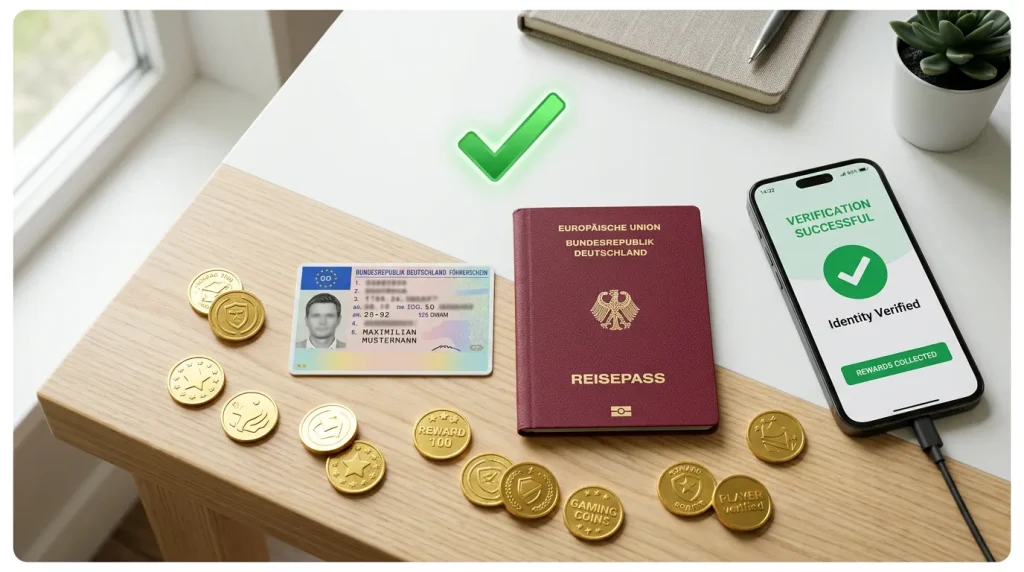
KYC verification stands between you and your sweepstakes casino winnings. Every platform requires identity verification before processing redemptions, and the process trips up players who don’t prepare properly. Documents get rejected. Timelines stretch. Frustration builds. None of this needs to happen.
The verification requirements exist because sweepstakes casinos, despite their promotional structure, handle real financial transactions. Operators must confirm player identities to comply with financial regulations, prevent fraud, and ensure age restrictions are met. As Tres York, Vice President of Government Relations at the American Gaming Association, has noted: “There are few if any responsible gaming tools, no regulatory oversight, and no consumer protections” at many sweepstakes platforms. KYC verification represents one area where legitimate operators do implement controls.
Understanding what documents you need, how to submit them correctly, and what causes delays empowers you to verify once and play freely. This guide covers everything required for smooth KYC completion at major sweepstakes casinos.
Understanding KYC Verification at Sweepstakes Casinos
Know Your Customer verification confirms you are who you claim to be and that you’re eligible to participate. The process involves submitting identification documents that operators verify against your account information. Once verified, you can redeem Sweeps Coins for cash prizes without repeating the process.
KYC requirements at sweepstakes casinos mirror those at traditional financial institutions, though often with less sophistication. Banks verify identity when you open accounts. Payment processors verify identity for certain transactions. Sweepstakes casinos verify identity before releasing prize redemptions. The underlying principle—confirming identity before financial transactions—remains consistent.
The regulatory driver comes from anti-money laundering and fraud prevention requirements. Even though sweepstakes casinos operate under promotional gaming frameworks rather than gambling licenses, they process real money transactions that trigger financial compliance obligations. These obligations require knowing who receives funds.
Age verification forms a critical component. Most sweepstakes casinos require players to be 21 or older, though some permit 18+ participation depending on state requirements. KYC documents must confirm the account holder meets minimum age requirements. This verification occurs before redemptions because registration often involves only self-reported birthdates without documentary confirmation.
Research from the American Gaming Association indicates that 90% of sweepstakes casino users believe they’re gambling when they play. This perception underscores why verification matters—players treat these platforms as gambling operations, and operators must implement corresponding controls even without formal gambling licenses.
Verification typically triggers at redemption rather than registration. You can create an account, purchase coins, and play games without submitting documents. The requirement activates when you request your first prize redemption. Some platforms encourage early verification to avoid delays when you’re ready to cash out.
Required Documents Checklist
Sweepstakes casino KYC requirements cluster around three verification objectives: identity, age, and address. Different platforms emphasize different combinations, but preparing documents in all three categories ensures you’re ready for any requirement.
Government-issued photo identification serves as the primary requirement. Acceptable documents typically include driver’s licenses, state ID cards, passports, and passport cards. The document must be current—expired IDs get rejected. The photo must be recognizable, and all information must be legible. Most platforms accept US documents readily; international documents may require additional review.
Driver’s licenses work most commonly because most Americans have them. Front and back images are usually required since security features and barcodes appear on both sides. State ID cards function identically for verification purposes. Passports provide stronger verification but require only the photo page. Passport cards—the wallet-sized alternative to passport books—work at platforms that accept them but aren’t universally recognized.
Proof of address confirms you reside where you claim. Utility bills, bank statements, and government correspondence typically qualify. Documents must be recent—usually within 90 days—and must show your name and address matching your account information. Some platforms accept the address on your government ID if it’s current, eliminating the need for separate address documentation.
Acceptable proof of address documents include electric, gas, or water bills; internet or phone bills; bank or credit card statements; tax documents or government notices; and lease agreements or mortgage statements. The document must be official—screenshots of online accounts typically don’t qualify without additional verification.
Selfie verification confirms you possess the identification documents submitted. Most platforms require a photo of you holding your ID, sometimes with a handwritten note including the date or the platform’s name. This step prevents identity theft where someone uses another person’s documents. Lighting and image quality matter—unclear photos cause rejection.
Some platforms use automated verification through third-party services. These systems may request a live selfie where you follow prompts to turn your head or blink, confirming you’re a real person rather than a static photo. The technology has improved substantially but still produces occasional false rejections.
Social Security Number may be requested for tax reporting purposes. Sweepstakes winnings above certain thresholds trigger 1099-MISC reporting, which requires your SSN. Not all platforms request this during initial KYC, but expect it eventually if you redeem significant amounts.
Step-by-Step Verification Process
The verification process follows similar patterns across platforms, though specific interfaces and requirements vary. Understanding the general flow helps you navigate any platform’s particular implementation.
Begin by accessing the verification section. This typically appears in account settings under labels like “Verify Account,” “Identity Verification,” or “KYC.” Some platforms prompt verification automatically when you request your first redemption. Others require manual navigation to initiate the process.
Review the specific requirements before gathering documents. Platforms differ in which documents they accept and what formats they require. Some accept PDF uploads while others require image files. Size limits may apply. Understanding these specifications prevents wasted effort submitting documents in wrong formats.
Photograph or scan your documents with attention to quality. Use good lighting—natural daylight works best. Ensure the entire document appears in frame without any corners cut off. Focus should be sharp enough that all text reads clearly. Avoid glare from laminated surfaces by angling documents appropriately.
For selfie verification, find a well-lit location with a plain background. Hold your ID at face level beside your cheek, not covering any facial features. If handwritten notes are required, prepare them legibly before taking the photo. Use a front-facing camera for better framing and take multiple attempts to get the best image.
Upload documents through the platform’s interface. Follow prompts indicating which document type each upload slot requires. Double-check that files uploaded successfully—some platforms show confirmation while others update status after processing. Note any reference numbers or confirmation messages.
Wait for processing while monitoring status. Most platforms provide verification status within their interface. Processing times range from minutes to several days depending on the platform and volume. Avoid submitting duplicate documents or repeatedly contacting support during normal processing windows, as this can complicate your case.
Respond promptly to additional requests. If documents are rejected or additional information is needed, platforms typically notify you via email and in-account messaging. Common requests include clearer photos, additional document types, or clarification of information discrepancies. Addressing these requests quickly minimizes total verification time.
Common Issues and Solutions
Verification problems follow predictable patterns. Knowing what causes issues helps you avoid them initially and resolve them quickly if they occur.
Blurry or unreadable documents cause the most rejections. Phone cameras can produce poor results in low light or when held unsteadily. Use a flat surface to photograph documents, increase lighting, and hold the camera parallel to the document face. Taking multiple photos and selecting the best one beats submitting marginal images.
Name mismatches between documents and account information create verification failures. If your ID shows “Robert” but you registered as “Bob,” the system may flag a discrepancy. Similarly, maiden names versus married names, or names with and without middle initials, can cause issues. Contact support to clarify which name version to use throughout.
Address discrepancies occur when your ID shows an old address or your utility bills go to a different location than your registered address. Keep your account address current and matching your documentation. If you’ve moved recently, update your ID before verification or provide additional documentation explaining the situation.
Expired documents won’t pass verification. Check expiration dates before submitting and renew documents that have lapsed. Most states offer renewal processing fast enough to resolve this within verification windows, though rush fees may apply.
Selfie rejections often result from poor lighting, ID covering too much of the face, or unreadable handwritten notes. Take these photos during daytime near windows. Hold the ID beside your face rather than in front of it. If notes are required, write clearly in dark ink on white paper.
Technical upload failures sometimes interrupt the process. File size limits may reject large high-resolution scans. Format requirements may exclude certain file types. Browser issues can interrupt uploads. Reduce file sizes through compression if needed, confirm acceptable formats, and try alternative browsers if uploads fail repeatedly.
Delayed processing beyond stated timelines warrants support contact. Before reaching out, confirm you’ve received no requests for additional documentation. Support tickets should reference any confirmation numbers from your submission and include a clear description of where the process stalled.
Verification Times by Casino
Verification timelines vary significantly across sweepstakes casinos. Setting realistic expectations prevents frustration and helps you plan redemption timing appropriately.
Stake.us typically processes verification within 24-48 hours for straightforward submissions. The crypto-focused platform prioritizes account security and has invested in verification infrastructure. Complex cases or document issues may extend timelines, but responsive support helps resolve problems.
McLuck aims for 24-72 hour verification processing. The platform has scaled its verification capacity as its player base grew. Weekend submissions may process slower than weekday ones. Their support team can provide status updates if processing exceeds normal windows.
Pulsz generally verifies accounts within 24-48 hours. The platform’s verification system handles high volumes given its large game library and player base. Clear document submissions process fastest; issues requiring manual review add days.
Chumba Casino verification can take 24-72 hours initially, though VGW’s mature systems handle most cases efficiently. As one of the longest-operating sweepstakes platforms, their verification processes have been refined over years. First-time redemptions may trigger additional review.
WOW Vegas targets 24-48 hour verification, consistent with industry norms. The platform’s streamlined approach generally meets these timelines for complete submissions without issues.
These timelines assume complete, accurate submissions during normal operating periods. Holiday seasons, promotional events that spike redemption requests, and technical issues can all extend processing. Submitting verification well before you need to redeem—ideally shortly after registration—eliminates timing pressure from the equation.
The sweepstakes industry handles billions in annual transactions, requiring verification systems that scale. Platforms that invest in automated verification technology generally process faster than those relying on manual review. Newer platforms may experience longer times as they build verification capacity.